
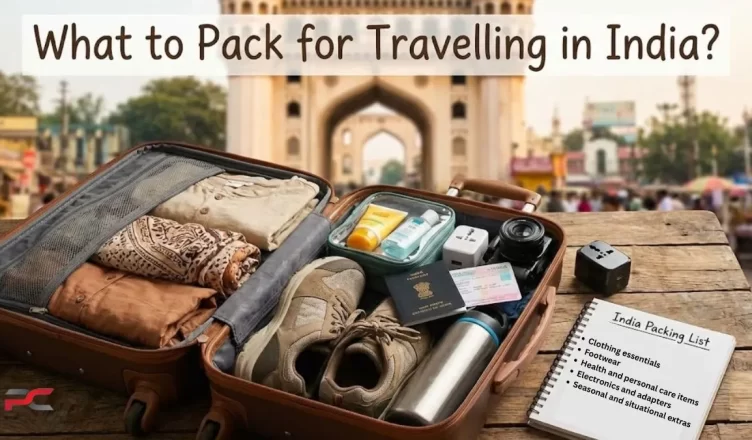
A reassuring start before you open your suitcase
What to pack for travelling in India is one of the first questions people ask, often even before booking their flights.
Let’s get one thing out of the way first.
You don’t need to pack everything.
Many people feel nervous before travelling in India. The country is big. Busy. Sometimes unpredictable. That doesn’t mean you need to prepare for every possible situation. It just means you need a few sensible basics and a flexible mindset.
This packing list is not built on theory or fear. It’s based on what actually gets used on the road. Travelling in India can feel chaotic at times, yes, but it’s also practical and forgiving. If you forget something, chances are you can find it easily.
If you forget something, chances are you can find it easily. For more advice on navigating your first few days, you might find our Best India Tour Packages for first-time visitors helpful in setting the right expectations.
Take a breath.
You’re already doing fine.
Packing depends on where and how you travel
India is not one climate or one experience. Packing for Mumbai is different from packing for the Himalayas. A beach town feels nothing like a desert city.
That said, most people travelling in India move between cities, cultural sites, trains, and short road trips. This guide focuses on those common situations.
You’ll see advice that works for:
- Cities and towns
- Temples and historic sites
- Day trips and walking-heavy days
Extreme cases like high-altitude trekking or deep jungle travel are a different category. This list keeps things realistic and useful.
Suggested Read: A Complete Travel Guide for Best Time to Visit India
Clothing essentials (comfort + respect)
This is usually the biggest question for first-time visitors.
What works well in Indian weather
India is warm for much of the year. Even in winter, daytime temperatures can feel mild.
- Light, breathable fabrics like cotton or linen
- Loose-fitting clothes that allow air flow
- Quick-dry items that are easy to wash
Tight or heavy clothing usually feels uncomfortable very quickly when travelling in India.
Cultural context that matters
You don’t need to dress traditionally, but modesty helps you blend in. You can find various festivals taking place at certain intervals in each season. You can take part in these cultural festivals of India with a proper dress code.
- Cover shoulders and knees in temples and rural areas
- Avoid very short shorts or low-cut tops
- A light scarf is useful for sun, dust, and temple visits
Dressing simply helps you move through places without drawing attention. If you plan on visiting holy cities like Varanasi, be sure to check the specific Varanasi temple dress code to ensure you aren’t turned away at the gate.
Layers for evenings
Even warm regions can cool down at night.
- One light jacket or sweater
- A long-sleeve layer for trains or buses
Nothing bulky is needed for most routes.
Footwear (this matters more than you think)
Travelling in India involves more walking than many travellers expect.
You’ll walk through:
- Markets
- Forts and old cities
- Railway stations and uneven streets
What works best
- Comfortable walking shoes or trainers
- Shoes that you don’t mind getting dusty
- Easy-to-remove footwear for temples
When sandals work
Sandals are fine for short walks or hot afternoons, but they don’t protect your feet well in crowded areas.
If you bring only one pair, choose walking shoes. Your feet will thank you.
Health and personal care items
This section isn’t about fear. It’s about convenience.
Basic medicines to carry
- Pain relief tablets
- Cold or stomach medicine you already trust
- Any personal prescriptions (with copies)
Pharmacies are common in India, but familiar brands help in the first few days.
Personal care basics
- Sunscreen (sun exposure adds up quickly)
- Insect repellent, especially in evenings
- Hand sanitizer
- Tissues or wet wipes
These items don’t mean India is unsafe. They simply make daily travel easier.
Travel documents and essentials for travelling in India
Getting these sorted early makes the actual trip feel so much lighter.
- Your passport and a valid visa (the non-negotiables)
- Both digital and printed backup copies of your main docs
- Your travel insurance policy details
- A list of emergency contact numbers
- Hotel booking confirmations or at least the addresses
Tip: Try to pack the copies in a different bag than your originals, just in case.
Electronics and adapters
Keeping your devices charged in India is actually pretty straightforward.
- Power and charging gear
- India uses a mix of Type C, D, and M plugs
- A universal travel adapter is honestly the easiest solution
- A power bank is a lifesaver for long travel days
- Power cuts are rare in big cities, but they can still happen in smaller towns.
SIM cards and connectivity
- Local SIM cards are affordable and reliable
- eSIMs also work well for short stays
- Wi-Fi is common in hotels and cafés
Getting connected is usually easier than expected.
Daypack and organisation tips
A small day bag makes daily movement smoother.
Why a daypack helps
- Carry water, sunscreen, and documents
- Keep hands free while walking
- Avoid carrying your main bag everywhere
Organisation basics
- Separate pouch for documents
- Small wallet for daily cash
- Keep valuables close in crowded areas
No need for heavy anti-theft gear. Just basic awareness.
What NOT to pack (this saves space)
Many travellers overpack these items and never use them.
- Too many clothes (laundry is easy and cheap)
- Heavy guidebooks
- Multiple pairs of shoes
- Full-size toiletries
Most everyday items are widely available in India. Carry less. Move easier.
Seasonal and situational extras
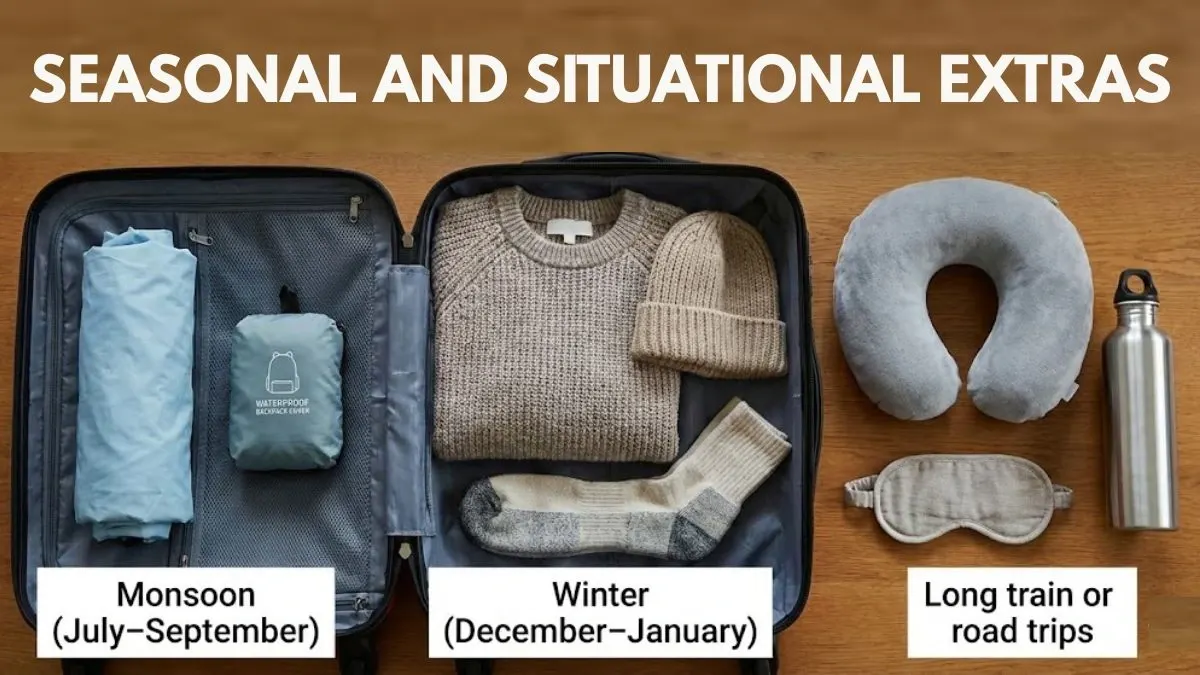
Only pack these if they apply to your trip.
- Monsoon (July–September): light rain jacket, waterproof cover
- Winter (December–January): warmer layer for evenings in the north. If your journey takes you higher into the peaks, refer to our specialized Himalayan packing list for advice on thermals and waterproof gear.
- Long train or road trips: eye mask, neck pillow, reusable water bottle
These are small additions, not requirements.
A calm ending before you zip the bag
Perfect packing doesn’t exist. And that’s okay.
Travelling in India is flexible. Shops are everywhere. People are generally willing to help if you ask. What matters more than a perfect checklist is leaving space in your bag and space in your plans.
This guide is meant to help you feel prepared, not anxious.
If you pack light, stay open, and give yourself time, things tend to work out.
You don’t need everything.
You just need enough to get started.
One thought on “What to Pack for Travelling in India?”