
There’s a version of India that most international visitors fly home talking about, and it’s the one they didn’t entirely expect. Not the Taj Mahal-extraordinary as it is. Not the palaces of Jaipur or the ghats of Varanasi, as unforgettable as those are. It’s the version that ambushed them somewhere between a farmer’s courtyard and a clay pot of milky chai: the village India. The one that smells of woodsmoke and fresh-turned earth and marigold garlands. The one where a grandmother teaches you to make roti on a cast-iron tawa and then insists you eat three more.
India has over 600,000 villages. Its soul lives in them. And while the country’s cities dazzle and its monuments command, it’s the villages that reach something deeper-a sense of human life lived close to the land, in rhythm with seasons and tradition, in a way that most of the modern world has largely forgotten. For international travellers willing to step beyond the standard circuit, village tourism in India offers experiences of a completely different order.
This guide focuses on five of the very best village tourism destinations-predominantly in North India, where the landscape shifts from Himalayan foothills to Thar Desert to the fertile Gangetic plains, and where the culture is ancient, generous, and genuinely welcoming to curious outsiders.
01. Hodka Village, Kutch, Gujarat
Where the White Desert Meets Living Art
Before anything else, a geographical clarification: Hodka sits in Gujarat’s Kutch district, which technically edges into western India rather than the northern heartland. But no list of India’s finest village tourism experiences is honest without it-and its connections to Rajasthan’s desert culture, its proximity to the Rann of Kutch, and its deep crafts tradition make it essential reading for any international visitor planning a North or Northwest India journey.
Hodka is a Mutwa Muslim community village, and its people are among the finest embroidery artists in the world. The geometric mirror-work embroidery produced here-intricate, dazzling, impossibly precise-has been passed from mother to daughter for generations and now appears in fashion houses from Milan to New York, often with no credit to the village that created it. Coming here is a chance to meet the actual artists, watch the work happen in real time, and buy directly from the hands that made it.
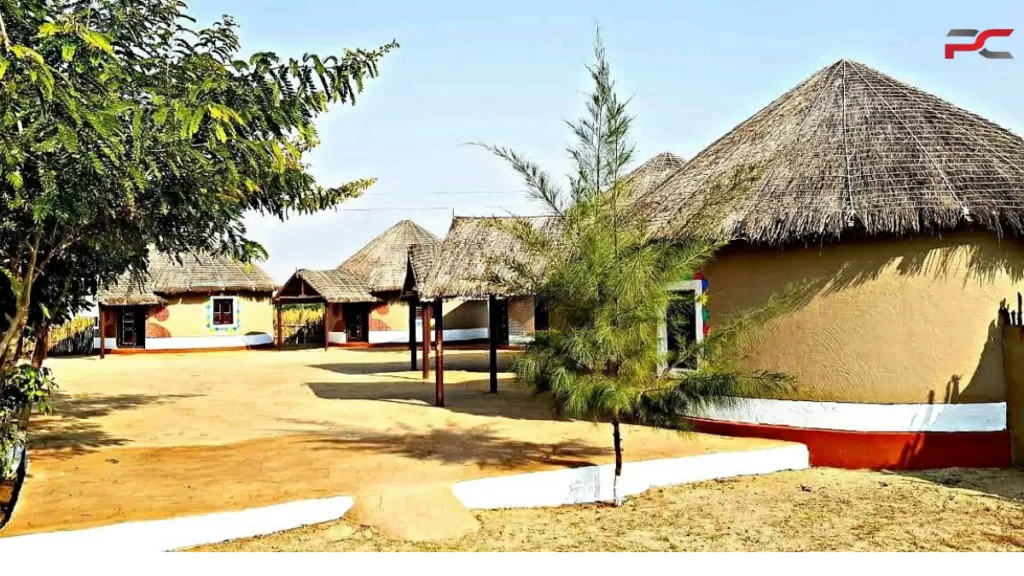
The accommodation at Hodka is provided through Shaam-e-Sarhad, a community-run resort of traditional bhungas-the round, whitewashed mud huts of the region, painted in geometric patterns and fitted with comfortable beds and lantern lighting. Staying in a bhunga, eating Kutchi cooking under a sky with zero light pollution, and waking up to walk across the white salt flats of the Rann at dawn is a combination that exists nowhere else on earth.
When to Go
November through February, timed if possible with the Rann Utsav festival that runs from October to February and brings cultural performances, folk music, and camel safaris to the salt desert every evening.
How to Reach
Fly to Bhuj (the closest airport, with connections from Mumbai and Ahmedabad), then hire a car for the 65-kilometre drive to Hodka. The drive through the Banni grasslands-once one of the finest pasturelands in Asia-is beautiful in its own austere way.
For International Visitors: Book Shaam-e-Sarhad directly through the Kutch Mahila Vikas Sangathan website or through specialist India travel operators. Rates are very reasonable and every rupee goes directly to the community.
02. Pragpur, Himachal Pradesh
India’s First Heritage Village-Cobblestones, Orchards & Colonial Calm
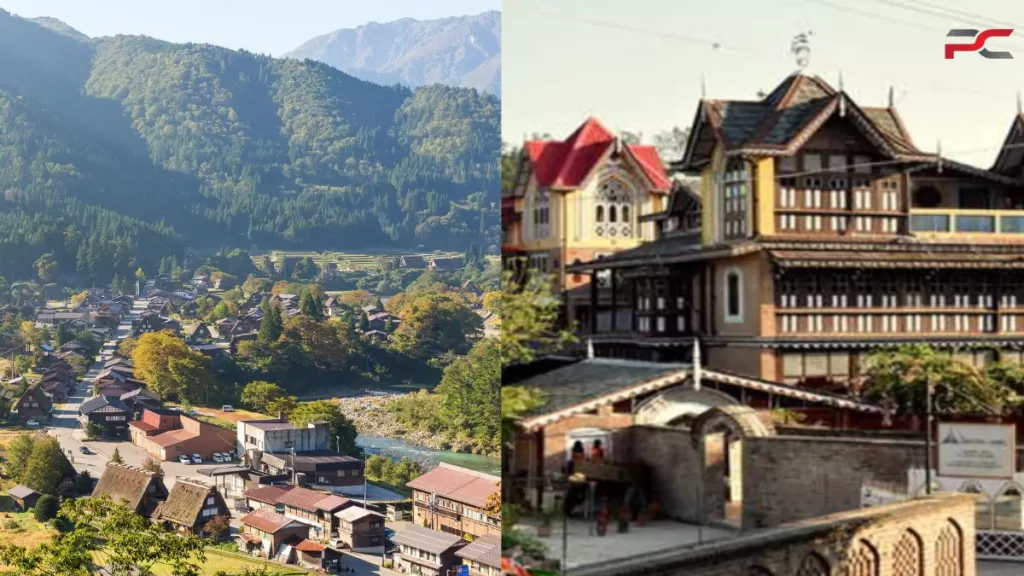
Tucked into the Kangra Valley in the lower Himalayas, Pragpur holds the distinction of being India’s first officially declared Heritage Village-a status granted in 1997 in recognition of its extraordinary preservation of medieval Punjabi architecture, its cobblestone lanes, and its general refusal to modernise at the expense of character.
Walking through Pragpur feels genuinely like entering a different century. The main village is built around a central chaupal (community square) and connected by lanes of smooth river-stone paving. The houses are constructed in the Kangri style-thick mud walls, carved wooden balconies, and slate roofs that have been doing their job for two and three hundred years. There are no hoardings, no plastic shop fronts, no concrete intrusions. The village elders made a collective decision to maintain the architecture as it was, and the result is one of the most visually coherent and emotionally calming places in northern India.
The crown of Pragpur’s accommodation story is Judge’s Court-a heritage manor house built in 1918, now operating as a boutique guesthouse. The rooms are filled with period furniture, family portraits, Pahari miniature paintings, and old books. The orchard garden produces its own fruits and vegetables, and meals are prepared from recipes that have been in the family for generations. Staying here is less like booking a hotel room and more like being invited into an exceptionally gracious home.
The surrounding Kangra Valley gives Pragpur its natural context. The Dhauladhar range of the Himalayas frames the horizon on clear mornings. The valley produces its own tea-Kangra tea, less famous than Darjeeling but with a delicate grassiness that devotees consider superior-and the local apple and plum orchards make autumn visits particularly beautiful.
When to Go
March through June for blossoms and clear mountain views. September through November for harvest season and the best apple orchards. December and January bring occasional snow and a very different, quieter magic. This season is perfect to explore beautiful Himachal places.
How to Reach
Fly to Kangra’s Gaggal Airport (connected to Delhi) or take an overnight train to Pathankot and hire a car for the two-hour drive into the valley. Pragpur is about 20 kilometres from the town of Dehra Gopipur. For a group travel, hire Urbania on Rent in Delhi and enjoy the road trip smoothly.
Don’t Miss: The village walk to Garli-a neighbouring heritage hamlet with an even more densely preserved collection of havelis (traditional mansions) and a completely intact period streetscape. Ask your host at Judge’s Court to arrange a walking guide.
03. Khimsar & the Bishnoi Villages, Rajasthan
Desert Dunes, Wildlife Guardians & the World’s Original Conservationists
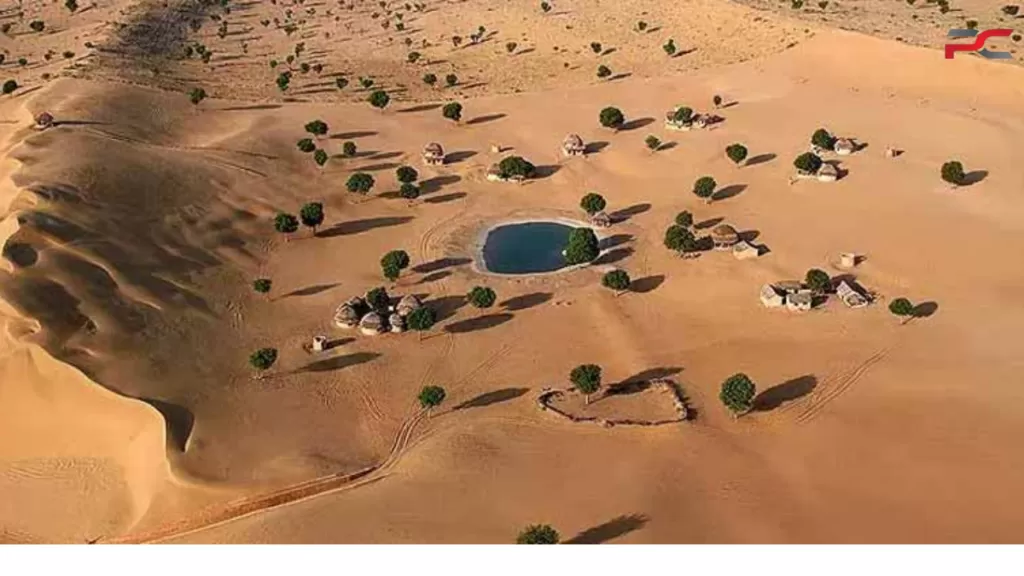
Rajasthan is a destination that international visitors tend to approach through its forts and palaces-and rightly so. But the villages scattered across the Thar Desert offer a dimension of the state that the palaces simply cannot. Nowhere is this more true than in the cluster of Bishnoi villages surrounding the town of Khimsar, about 100 kilometres from Jodhpur.
The Bishnoi community is one of the most remarkable in India-a Hindu sect founded in the 15th century on 29 core principles of ecological harmony, many of which read like a remarkably prescient environmental manifesto: do not cut green trees, protect animal life, use water sparingly, live gently on the land. The Bishnoi have been tree-huggers-literally-for 500 years before the word entered environmental vocabulary. Their famous 1730 sacrifice, in which 363 men and women gave their lives to prevent royal woodcutters from felling the trees around their village, is considered one of the earliest recorded acts of environmental activism in human history.
Visiting the Bishnoi villages today means entering a landscape where blackbuck antelope graze alongside cattle, where chinkaras (Indian gazelles) move freely through agricultural fields without fear of harm, and where the community’s relationship with the natural world feels both ancient and quietly radical. Village jeep safaris through the Bishnoi heartland typically visit a potter’s workshop, a weaving collective, a cooking demonstration of traditional dal-baati-churma (the iconic Rajasthani lentil and wheat bread dish), and an opium ceremony-the traditional Bishnoi welcome where a preparation is offered in the cupped hands, a gesture of profound hospitality.
For accommodation, Khimsar Fort and Sand Dunes Village offers a combination of restored heritage rooms in a 15th-century fort and luxury tented camps at the edge of genuine sand dunes. The combination of desert sunset, village visits, camel rides, and fort heritage makes this one of the most complete rural Rajasthan experiences available. Booking a complete Rajasthan Tour Package with transportation, accommodation will make your experience much better. n
When to Go
October through March without question. The desert nights are cold and clear, the days are warm and comfortable, and the wildlife is most active in the cooler temperatures.
How to Reach
Fly to Jodhpur (excellent connections from Delhi, Mumbai, and Jaipur) and hire a car for the 100-kilometre drive. Most heritage hotels can arrange airport pickup and guided village visits as part of your stay.
For Photography Enthusiasts: The Bishnoi villages offer some of the finest documentary photography opportunities in all of India-the light in the late afternoon across sand-coloured compounds, women in bright odhnis carrying water pots, and blackbuck moving through mustard fields is the visual North India that lives in the imagination.
04. Orchha, Madhya Pradesh
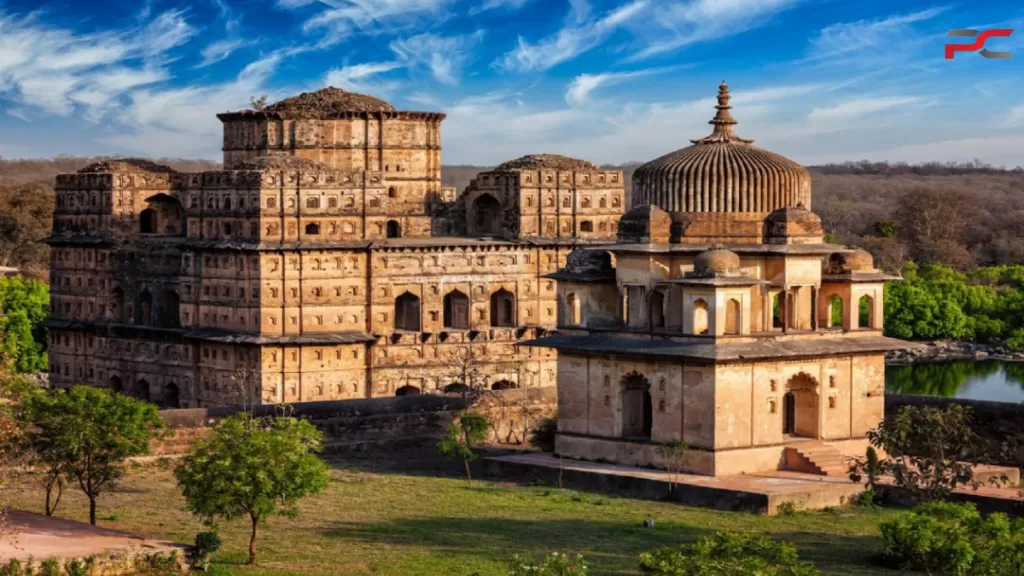
A Medieval Town Frozen Mid-Sentence-Cenotaphs, Temples & River Life
Orchha is an anomaly-a place that technically qualifies as a town but operates entirely with the pace, scale, and soul of a village. Founded in the 16th century as the capital of the Bundela Rajput dynasty, it was abandoned in favour of Tikamgarh in 1783 and essentially left as it was: a collection of extraordinary palaces, temples, and cenotaphs slowly being reclaimed by nature on the banks of the Betwa River, while a small community of a few thousand people quietly went about their daily lives in its shadow.
Today, Orchha is one of the most timelessly atmospheric places in central India, and one of the most undervisited by international tourists-which makes it all the more precious. The Jehangir Mahal palace, built to impress the Mughal emperor on his visit, is a masterpiece of Hindu-Islamic architecture with turquoise tile inlays that still glow after 400 years. The Ram Raja Temple-the only temple in India where Lord Ram is worshipped as a king rather than a deity, with full royal protocol including a morning and evening guard of honour-is one of the most distinctive religious sites in the country.
But Orchha’s real magic is in the texture of daily life around these monuments. Women washing saris on the ghats of the Betwa at dawn while cenotaphs loom behind them. Langur monkeys picking their way across palace rooftops. A lone sadhu sitting in meditation in a crumbling chattri (domed pavilion) above the river. Cycle through the back lanes in the early morning and you’ll pass vegetable vendors setting up stalls against walls that have been standing since the time of Akbar.
For international visitors routing through Madhya Pradesh-perhaps connecting Agra to Khajuraho-Orchha is the obvious overnight stop, and one that frequently ends up becoming the unexpected favourite of the trip.
When to Go
October through March for comfortable temperatures. The Betwa River is beautiful during and just after the monsoon (September to October) when it runs full and green.
How to Reach
Orchha is 16 kilometres from Jhansi, which is on the main Delhi-Chennai rail line and served by all major express trains. From Jhansi, hire a cab or take a local bus. From Khajuraho, it’s roughly four hours by road.
Stay At Least One Night: Orchha at dusk and dawn is entirely different from Orchha in the tourist-hour afternoon. The evening puja at the Ram Raja Temple, with its military-style ceremony and bell-ringing, is not to be missed. Book at Amar Mahal or Bundelkhand Riverside for heritage character and good riverside locations.
Suggested Read: Safety tips for foreign tourists visiting India
05. Supi & the Himalayan Villages of Munsiyari, Uttarakhand
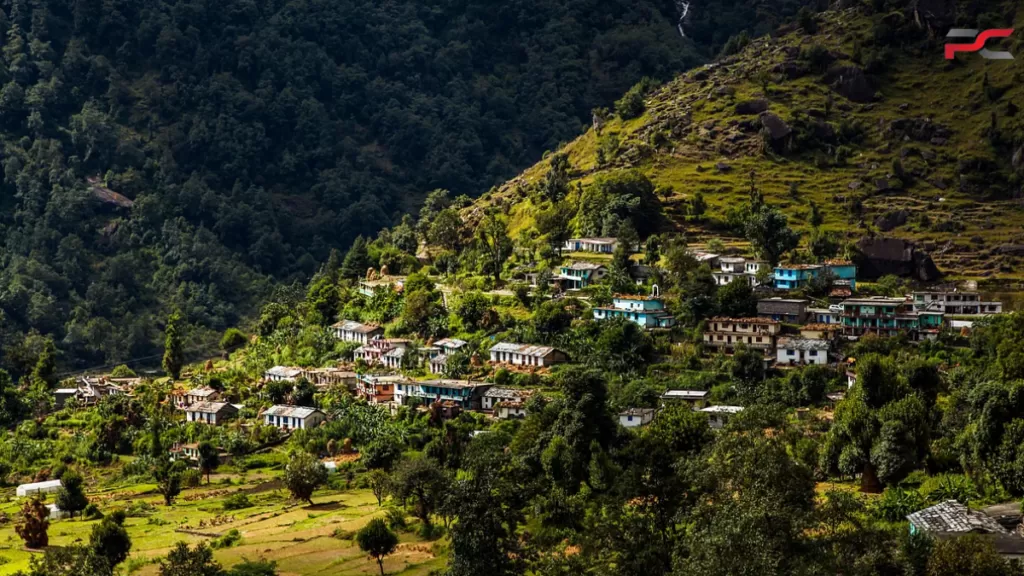
Apple Orchards at 7,000 Feet-Where the Himalayas Come Down to Meet You
For a completely different texture of North Indian village life-one that trades mustard fields and desert dunes for apple orchards and snow peaks-the high-altitude villages of the Johar Valley in Uttarakhand’s Munsiyari region are nothing short of extraordinary. This is the far northeast corner of Uttarakhand, close to the Tibetan and Nepalese borders, where the Panchachuli peaks (five summits that mythology says are the cooking fires of the Pandava brothers) dominate the skyline in a way that makes you feel permanently, pleasantly humbled.
Supi is a small village at around 2,200 metres that has become a quiet model for community-based Himalayan tourism. The local Johari community-semi-nomadic traders who historically crossed Himalayan passes into Tibet-maintain a traditional lifestyle of agriculture, animal husbandry, and weaving that has changed little in its essentials for centuries. Homestays here are hosted by local families in stone-and-wood houses with vegetable gardens producing mustard, buckwheat, and rajma (the kidney beans that are a Kumaoni staple), and meals are cooked on wood fires and include local recipes that you will not find in any restaurant anywhere.
The trekking from Supi and the surrounding villages reaches landscapes of improbable beauty-rhododendron forests that turn crimson in spring, high meadows called bugyals where shepherds take their flocks in summer, and clear mountain streams that run cold enough to make your hands ache. The Panchachuli base camp trek is an established multi-day route. But even a short walk from the village to a ridge with an unobstructed view of the Panchachuli massif at sunrise is the kind of moment that resets something in you. In the fresh air of Uttarakhand, you can also enjoy Yoga Tourism in India that offers a rejuvenating mind, body and soul.
When to Go
April through June for rhododendron blooms and spring clarity. September through November for post-monsoon crystal visibility and harvest season colour. Winter from December to February brings snow and a deep, hushed stillness that some travellers find utterly magical and others find simply too cold.
How to Reach
Fly to Pantnagar Airport in the Kumaon foothills, then hire a private car for the eight to nine hour drive up into the mountains via Almora and Birthi Falls. The road journey itself-winding through terraced hillside villages and rhododendron forests-is part of the experience. Some travellers take an overnight train to Kathgodam and then drive from there.
Book Through Community Networks: Organisations like Indiahikes and local operators like Explore Himalaya connect travellers with vetted village homestays in the Munsiyari area. Booking through community networks ensures your money stays in the village and your host family is prepared and comfortable hosting international guests.
How to Do Village Tourism Respectfully?
A final word on how to be a good guest in rural India, because it matters more here than in any five-star hotel or heritage palace. Contacting a reliable tour operator in India who can take you to have best village tour experiences.
Ask before photographing people. In most villages this is welcomed, but asking first-even through a gesture and a questioning look-transforms the interaction from extraction to connection. Dress modestly, particularly in communities where traditional values are central to daily life. Accept hospitality when it’s offered-refusing chai or food can cause genuine offence in a culture where feeding a guest is an act of deep honour. Carry small denominations of cash for purchasing crafts directly from artisans. Don’t negotiate aggressively; the margins here are not what they appear to be.
The villages in this guide are not museum exhibits. They are living communities with working lives, complex relationships with tourism, and a dignity that deserves more than a lens pointed at picturesque poverty. Come curious. Come slowly. Come willing to sit without an agenda. That openness-more than any itinerary or app or booking-is what unlocks the real India.
And the real India, once it gets its hands on you, is very reluctant to let go.
The cities show you India’s ambition.
The villages show you its heart.
Come for the monuments. Stay for the mustard fields.
Wonderful guide! Booking a Tempo Traveller for Outstation is a smart choice for family vacations and corporate tours.