
A calm start before you plan anything
If you’re thinking about Rajasthan, you might already feel a little unsure. Not scared. Just cautious.
People describe it as busy. Loud. Intense.
That’s not wrong. But it’s also not the full picture.
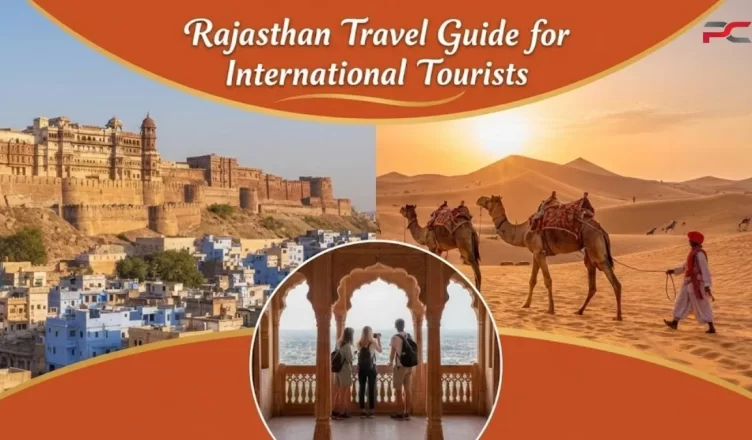
This Rajasthan Travel Guide for International Tourists is written for people who want clarity, not bravado. You don’t need to be a seasoned traveler. You don’t need to understand India before arriving. Many visitors come here with the same questions you probably have right now.
Rajasthan can feel like a lot at first. Then, slowly, it starts to feel manageable.
Where Rajasthan is and why it feels unlike anywhere else
Rajasthan sits in the north-west of India, close to the Pakistan border. Large parts of the state stretch into dry, open land, while cities rise around old forts and walls.
What makes Rajasthan feel different is space.
- Cities feel wide, not cramped
- Forts sit high above daily life
- Traditions are visible, not hidden
You won’t find the same pace as coastal or southern India. Things move slower here. Conversations take time. Hospitality is direct and sincere, especially toward international visitors.
Most trips here are shaped by forts, desert roads, old cities, markets, and long evenings.
Places in Rajasthan that make sense for first-time visitors
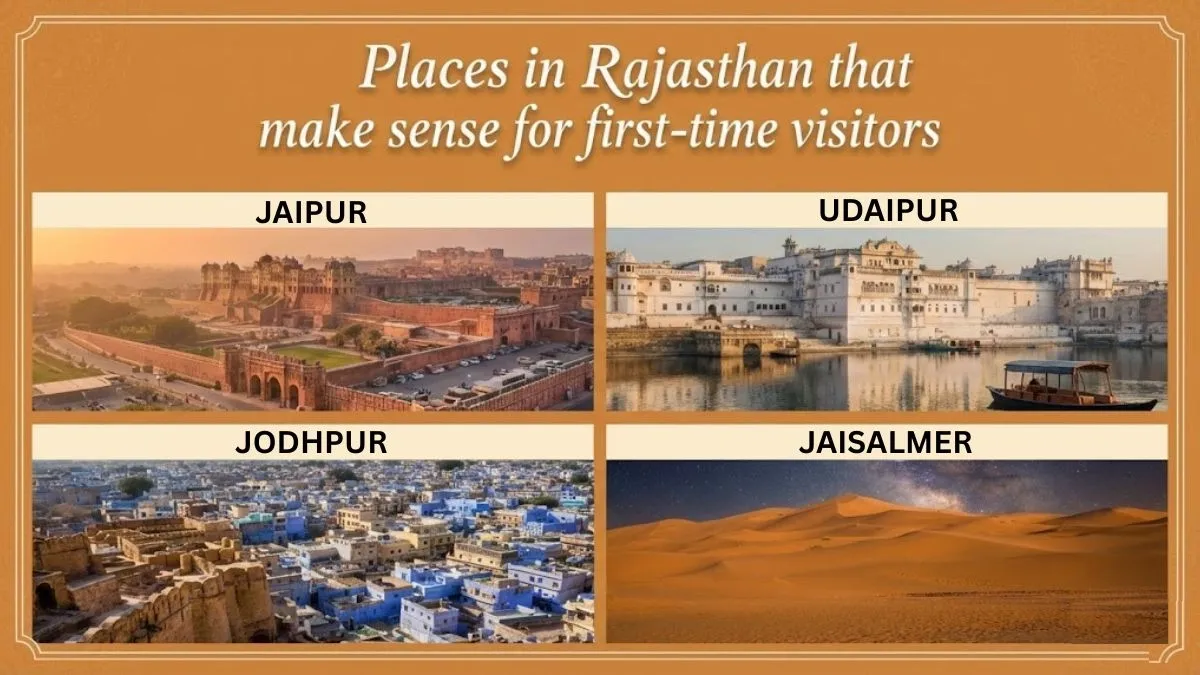
Jaipur – Structured and approachable
Jaipur is often where international travelers begin.
Why it works:
It’s busy, but organised. Roads are wider. Landmarks are clear. It helps you settle in.
What you’ll likely see:
Amber Fort, City Palace, Hawa Mahal, and well-marked tourist areas that don’t feel confusing on day one.
Udaipur – Slower and quieter
Udaipur feels like a pause.
Why it matters:
After moving through forts and cities, this is where people breathe easier.
What stays with you:
Lake walks, boat rides, quiet mornings, and evenings without pressure.
Jodhpur – History with distance
Jodhpur rises around its fort.
Why it’s important:
Mehrangarh Fort gives you a sense of scale. You see how cities were shaped by defence and geography.
What people remember:
Views from above and blue-painted houses below.
Jaisalmer – The desert stretch
Jaisalmer is less about sights and more about surroundings.
Why visitors go:
To understand the Thar Desert without discomfort.
What defines Jaisalmer is the open sand, quiet nights, and long horizons. For those wanting to experience the dunes up close, our Jaisalmer desert safari guide covers everything from camel rides to luxury overnight camping under the stars.
Cultural basics that help avoid awkward moments
This part matters more than people admit.
Clothing
You don’t need traditional wear. Simple, modest clothes are enough. Covering shoulders and knees helps you blend in, especially outside big cities.
Greetings
A smile works everywhere. “Namaste” is always safe. Handshakes are fine if the other person initiates.
Photography
Ask before taking photos of people. Many will say yes. Some won’t. Respect both.
Interaction
Curiosity is common. Most questions are friendly. If you’re uncomfortable, a polite decline usually works.
Best time to visit Rajasthan (thinking about comfort)
Weather affects Rajasthan more than people expect.
- October to March is easiest for walking and sightseeing
- Evenings can be cool, especially in winter
- Festivals around October and November bring crowds and colour
- April to June can be exhausting if you’re not used to heat
October to March is the easiest for walking and sightseeing because the desert sun is much milder. If you are planning to visit during these months, read our Rajasthan winter travel guide to see which festivals and desert bonfires you shouldn’t miss.
Food in Rajasthan: what feels safe and what to ease into
Food is a common worry. It doesn’t need to be.
Good starting points
- Hotel restaurants
- Well-reviewed local places
- Vegetarian dishes cooked fresh
Take it slow with
- Street food at first
- Very spicy dishes
Water
- Drink bottled or filtered water
- Skip ice unless you trust the place
Most stomach issues come from rushing, not the food itself.
Getting around Rajasthan without stress
Transport here is simpler than it sounds.
- Trains connect major cities and are widely used
- Private cars with drivers are common and comfortable
- Road travel is long but steady
Many international travelers prefer a Rajasthan tour by car and driver. It removes decision fatigue.
Where to stay: what works best for foreigners
You’ll see two main options.
Heritage hotels
- Older buildings
- Character and atmosphere
- Good service in tourist cities
Modern hotels
- Predictable comfort
- Easier adjustment if you’re new to India
Staying close to old cities or lakes reduces travel time and effort.
Safety, scams, and common mistakes (calm version)
Rajasthan is generally safe.
A few things help:
- Book from a well known taxi operator
- Decline unsolicited guides politely
- Keep valuables secure in crowded areas
Most “scams” are more annoying than dangerous. Staying calm solves most situations.
A simple 7 – 10 day Rajasthan Travel Guide route
This pace works for many international visitors.
- Day 1–2: Jaipur
- Day 3: Jaipur to Jodhpur
- Day 4: Jodhpur
- Day 5: Jodhpur to Jaisalmer
- Day 6: Jaisalmer and desert stay
- Day 7: Travel to Udaipur
- Day 8–9: Udaipur
- Day 10: Departure or extension
This 10-day route is a great starting point for most. For a more detailed breakdown of what to do each morning and evening, you can check out this 10-day Rajasthan travel itinerary designed specifically for first-time visitors.
Ending, without rushing it
Rajasthan doesn’t try to be easy.
It asks you to pay attention.
Some days will feel long. Some moments will feel unfamiliar. But if you move at a reasonable pace, Rajasthan starts to explain itself – not through words, but through space, routine, and repetition.
This Rajasthan Travel Guide for International Tourists isn’t about covering everything. It’s about covering enough to understand why people remember this place long after they leave.
If you give Rajasthan time, it gives you perspective.
One thought on “Rajasthan Travel Guide for International Tourists”