
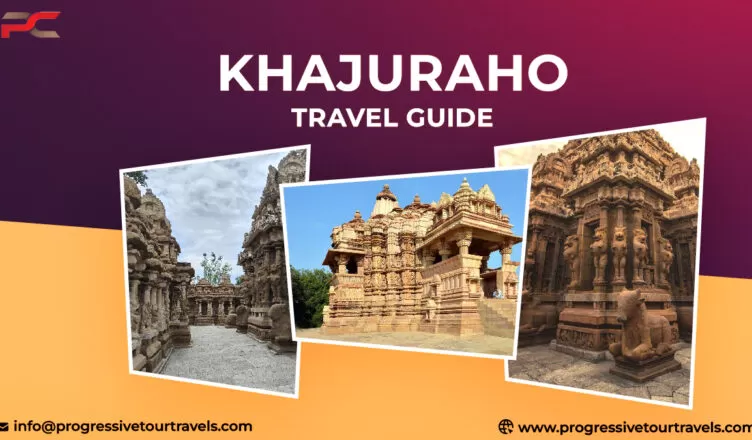
Somewhere in the heartland of India, in a small town in Madhya Pradesh that most of the world had never heard of until UNESCO declared it a World Heritage Site, a thousand years of human desire was carved in sandstone and left standing for eternity. Find answers to all your queries in this Khajuraho Travel Guide.
Welcome to Khajuraho- one of the most extraordinary, misunderstood, and frankly unmissable destinations in the entire country. Yes, the temples are famous for their erotic sculptures. But if that’s all you’ve heard about Khajuraho, you’ve only caught the headline and missed the whole story. The Chandela dynasty built 85 temples here between 950 and 1050 CE. Only 25 survive. And what survives is one of the greatest achievements in human art- not just the sensual panels, but thousands of celestial dancers, warriors, gods, elephants, and scenes of everyday medieval life, carved with a precision and tenderness that stops your mid-sentence.
For international travellers making their way through India, Khajuraho is the kind of place that earns a very special kind of reverence and keep special hold in Heritage Tourism of India. Plan it right, and it will rank among the highlights of your entire India trip.
How to Reach Khajuraho?
By Air — The Easiest Option
Khajuraho has its own domestic airport with direct flights from Delhi (approximately one hour), Varanasi (around 30 minutes), and occasionally Agra during peak season. Air India and IndiGo serve this route regularly. Flying in is the most comfortable approach and turns what would otherwise be a long overland journey into a simple hop. The airport is small, friendly, and just a short ride from the temples — you can practically see the shikhara spires from the tarmac.
By Train from Delhi or Agra
The Mahakaushal Express runs overnight from Hazrat Nizamuddin station in Delhi to Khajuraho, arriving in the morning after roughly ten to eleven hours. It’s a reasonable option if you prefer train travel and want to wake up already there. From Agra, most travellers go via Jhansi Junction and then take a connecting train or cab onwards- the Jhansi to Khajuraho road journey takes about three to four hours through the Bundelkhand countryside, which is beautiful in its own stark, ancient way.
Delhi to Khajuraho by Road
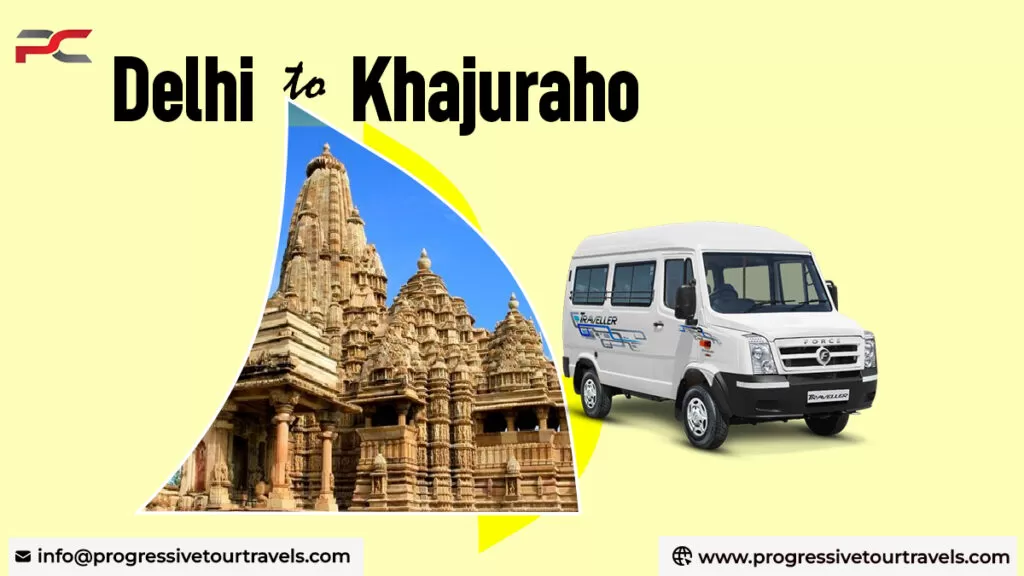
It is most practical way as it offers to explore enroute places as mentioned above. Delhi to Khajuraho distance is approx 700 Km and can be tiring if travelling in one go. So, it is suggested to give a break at Agra and then continue the trip. For this wonderful heritage road trip in India, you can book Tempo Traveller on rent in Delhi and go on the route smoothly.
Follow this route and itinerary to make the most:
Delhi-Agra (1st Day)
Agra-Khajuraho (2nd Day)
Khajuraho (3rd Day)
Golden Triangle Plus Extension
The most popular international itinerary runs Delhi — Agra — Jaipur (the Golden Triangle Tour India) and then extends to Khajuraho and Varanasi before flying out. This works beautifully as a two-week India circuit and is exactly how most first-time international visitors experience the country’s historic core. Khajuraho sits perfectly between the Agra chapter and the Varanasi chapter of that story.
Insider Tip: Fly into Khajuraho from Agra or Delhi and fly out to Varanasi. This saves hours of road time and keeps your energy for the temples, which genuinely deserve it.
Suggested Read: Agra Travel Guide for Foreign Tourists
When to Visit Khajuraho?
October through March is the ideal window, and the same logic that applies to most of northern India applies here. The days are warm and clear, evenings are cool, and the honey-coloured sandstone of the temples glows in the winter light in a way that makes photographers weep quietly with gratitude.
February is particularly special- the Khajuraho Dance Festival takes place against the backdrop of the illuminated Western Group of temples, and classical Indian dance forms like Bharatanatyam, Odissi, and Kathak are performed by the country’s finest artists. If your dates can align with this festival, move everything else around to make it happen. It is an experience that connects the ancient artistry of the temples to living performance in a way that nothing else quite does.
Avoid May and June- temperatures climb well past 40°C and the town slows down considerably. The monsoon from July through September is manageable, greener than you’d expect, and brings the added bonus of far smaller crowds, though some days of heavy rain can make temple exploration genuinely uncomfortable.
The Temples — What to See and How to Experience Them
The Western Group — Start Here
The Western Group is the main archaeological park and contains the finest and most famous temples, including the Kandariya Mahadeva- the tallest and most elaborately carved of all. This temple alone justifies the journey. Its exterior is covered in over 800 sculpted figures arranged in horizontal bands, each one a masterwork of medieval Indian stone carving. The erotic panels occupy only a small fraction of the total sculpture -roughly ten percent- but the human figures, in every position and expression imaginable, are carved with such physicality and joy that they feel less like stone and more like they’ve been paused mid-movement.
Hire an Archaeological Survey of India licensed guide for the Western Group without hesitation. The iconography here is dense and layered- the difference between wandering through with a guidebook and walking through with a knowledgeable guide who can explain the theological context, the mythological narratives, and the symbolic architecture is the difference between seeing extraordinary stone and understanding extraordinary civilisation. If you also want to explore Wildlife of India, visit Panna Tiger Reserve- One of the best Tiger Safari Spots in India. It is only 25 km from Khajuraho.
The Eastern Group — Where the Crowds Thin
A short cycle-rickshaw ride from the Western Group, the Eastern temples include both Hindu and Jain shrines and are visited by a fraction of the people who spend all their time in the main park. The Parsvanatha Temple in the Jain group is particularly remarkable — its sculptures of women applying kajal to their eyes, removing thorns from their feet, and playing with children are breathtaking in their intimacy. This is where Khajuraho becomes quietly personal.
Read This: Ajanta Ellora Caves Tour Guide
The Southern Group
Only two temples here, but the Chaturbhuja Temple contains a magnificent monolithic statue of Vishnu standing nearly three metres tall, with an expression of such serene authority that it’s genuinely difficult to look away. Worth the fifteen-minute walk.
The Sound and Light Show
Every evening, the Western Group of temples hosts a sound and light show that narrates the history of the Chandelas through illuminated architecture and dramatic storytelling. The English version is well-produced and emotionally effective- seeing the Kandariya Mahadeva lit in gold against the night sky while the Chandela story unfolds around you is a genuinely moving way to end your first day in Khajuraho.
Where to Stay in Khajuraho?
Lalit Temple View
The finest hotel in Khajuraho and genuinely one of the most atmospheric properties in Madhya Pradesh. Rooms in the heritage wing have direct views of the illuminated Western Group temples from your balcony — and waking up to that sight is not something you’ll forget quickly. The restaurant is excellent, the pool is beautiful, and the service is warm and attentive. Book well ahead during the Dance Festival and peak season.
Radisson Jass Khajuraho
A reliable international-standard property with good facilities, a comfortable pool, and a well-regarded restaurant. The Radisson is a safe and comfortable choice for travellers who want consistency and don’t need the heritage atmosphere of the Lalit.
Ramada by Wyndham
Good mid-range international standard. Clean rooms, helpful staff, and a location that puts the Western temples within easy walking distance. Solid value for travellers who want comfort without splurging on the full luxury tier.
Note on Khajuraho’s Scale: This is a small town. All the major hotels are within a few minutes of the Western Group. Wherever you stay, you’re close to everything — which is one of the genuine pleasures of Khajuraho compared to larger Indian cities. Take a complete Khajuraho tour package for standout travel experiences in India.
These are some of the suggestions in this Khajuraho Travel Guide. For hotel stay, you can search and talk to Boutique hotels for best price and facilities offered.
Where to Eat
Khajuraho is a small town and the dining scene reflects that — but there are some genuinely excellent options, particularly for travellers who want good Indian food in a comfortable setting.
The Lalit Temple View’s Sangrilla Restaurant serves well-executed North Indian and Mughal cuisine, and the setting with temple views makes dinner here a proper occasion. For something more casual, Raja Cafe on the main road has been feeding international backpackers and curious travellers since the 1980s and remains a reliable spot for dal, roti, and cold beer in a relaxed atmosphere.
Mediterraneo is a small Italian-Indian hybrid restaurant that has built a loyal following among international visitors who want a break from subcontinent spices- the pasta is genuine comfort food and the owner is happy to talk temples over dinner. For local street snacks, the market lanes around the bus stand have excellent chaat, samosas, and the Madhya Pradesh specialty of poha- flattened rice cooked with turmeric, mustard seeds, and sev- which makes the perfect breakfast before a morning of temple exploration.
Practical Notes for International Visitors
Tickets and Timings
The Western Group temples are managed by the Archaeological Survey of India. Entry for foreign nationals is currently around 600 INR, payable at the gate. The park opens at sunrise and closes at sunset — early morning is the finest time to visit, when the light is gentle and the crowds haven’t yet arrived. Photography is permitted and encouraged throughout.
Getting Around in Khajuraho
Khajuraho is made for slow movement. The Western Group is walkable from most hotels. For the Eastern and Southern groups, hire a cycle-rickshaw for the morning — the drivers know the routes well and the pace is perfectly suited to temple-hopping. Bicycles are available for rent from several shops near the Western Group entrance for travellers who want independence.
How Long to Stay here?
One full day covers the essential temples. Two days lets you breathe, revisit in different light, see the Eastern and Southern groups without rushing, attend the sound and light show in the evening, and spend a morning simply sitting with the Kandariya Mahadeva watching the light change on the stone. Two days is the sweet spot for most international travellers. Three days is never wasted here. If you are confused to plan a trip on your own, contact us- best travel agency in India for curated tour packages.
Context Before You Arrive
Do yourself a favour and read at least a short overview of Chandela dynasty history and Hindu temple iconography before you arrive. The temples are extraordinary regardless of context, but understanding that the erotic sculpture is likely connected to Tantric philosophy, astronomical symbolism, or transitional thresholds between the secular and sacred world transforms what you’re seeing from shock-value curiosity into something philosophically profound. Your guide will elaborate, but arrive with the framework already in place.
2 thoughts on “Khajuraho Travel Guide- A Complete Guide for Tourists”