
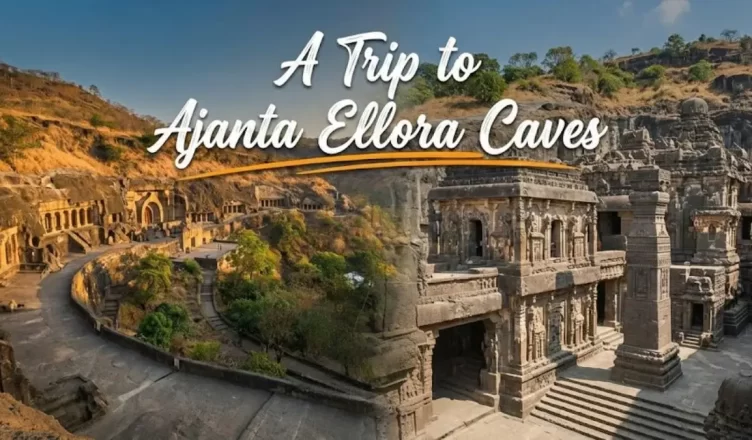
A calm beginning to a timeless journey
A trip to Ajanta Ellora Caves is not something you rush into with a checklist. It unfolds slowly. The kind of journey where silence speaks louder than words and stone carries memory. Long before you understand what you’re looking at, you feel it. A sense of patience. Of belief. Of time moving at a very different pace.
People travel far to reach Ajanta and Ellora not for excitement, but for perspective. These caves do not impress instantly. They invite you to pause. To look closely. To walk gently. And in doing so, they remind you that some places are meant to be experienced quietly.
What Ajanta and Ellora Caves really are
For first-time visitors, clarity matters.
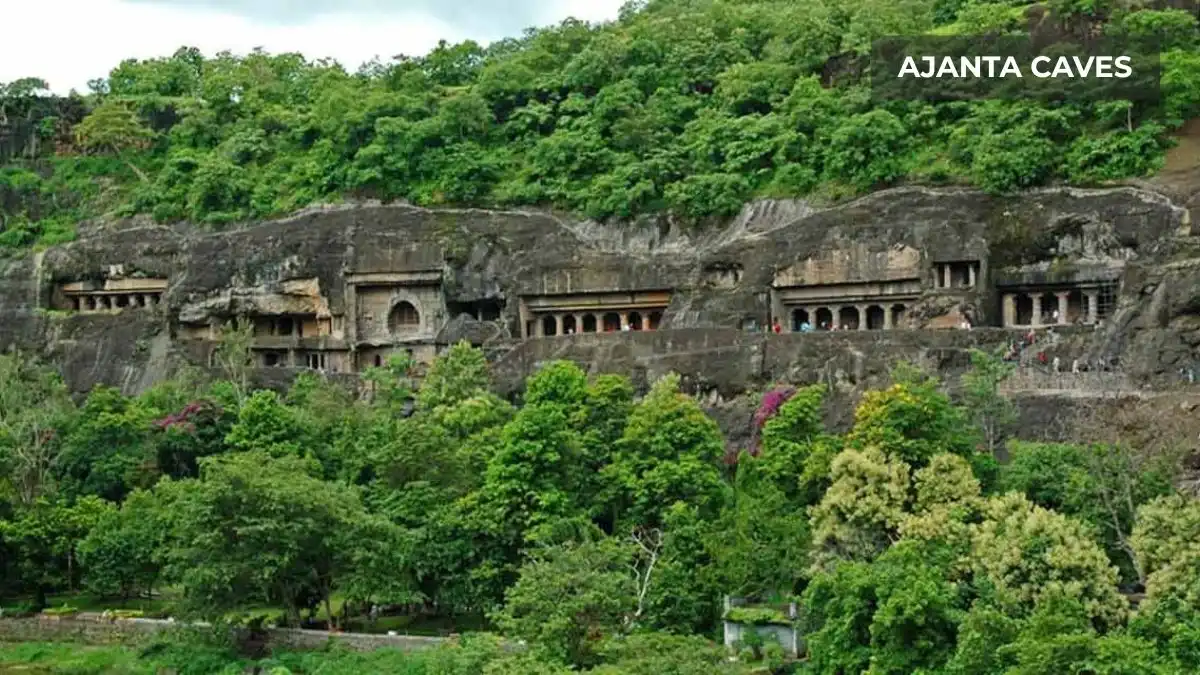
Ajanta Caves are a series of Buddhist rock-cut caves carved into a curved cliff overlooking a river valley. They are known for their ancient murals and peaceful, almost meditative setting.
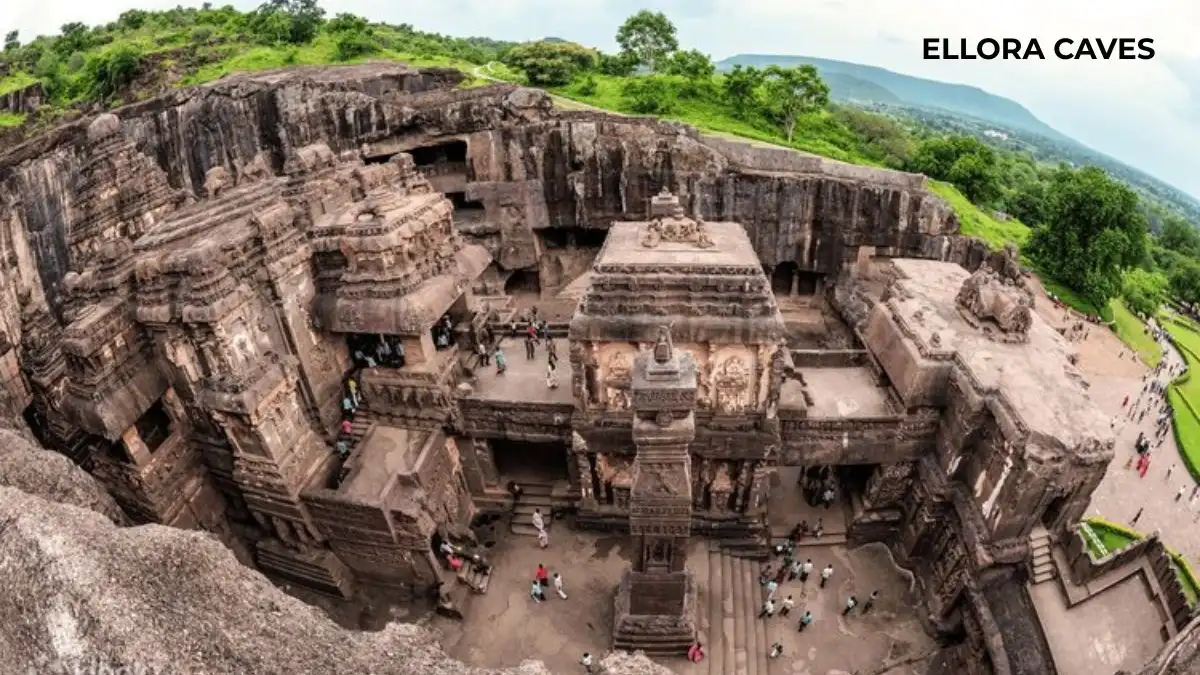
Ellora Caves, located a short distance away, are a much larger complex that brings together Buddhist, Hindu, and Jain caves in one place. Instead of paintings, Ellora focuses on sculpture, architecture, and scale.
Ajanta feels inward and reflective.
Ellora feels expansive and powerful.
Together, they form a complete journey. That is why a trip to Ajanta Ellora Caves feels balanced, not repetitive.
Why Ajanta Ellora Caves are UNESCO World Heritage Sites
The Ajanta Ellora Caves are recognized by UNESCO because they represent something rare in human history.
- Entire temples were carved from solid rock, not assembled
- Art and belief survived without modern preservation tools
- Multiple faiths coexisted in a shared sacred landscape
UNESCO status is not just an honour. It is a reminder that these spaces are fragile. They stand alongside the most iconic historical places in India as shared human heritage that deserves respect, patience, and care.
Ajanta Caves
What makes Ajanta special
Ajanta does not feel busy, even when people are present. The caves follow the curve of the cliff, and the valley below keeps everything quiet. Inside, the paintings speak through expressions rather than colour alone. Faces feel alive. Stories unfold without explanation.
Many travelers remember Ajanta for the calm it creates. It slows you down without effort.
What not to miss inside Ajanta
- Cave 1 and Cave 2 for detailed murals
- Cave 26 for the reclining Buddha
- Small details in the paintings like hand gestures and eye expressions
Most people walk past these details. Ajanta rewards those who stay still.
How much time to keep for Ajanta
- At least half a day
- Walking involves slopes and steps
- Go slowly. This is not a place to rush
Ellora Caves
What makes Ellora special
Ellora feels dramatic the moment you arrive. The space opens up. The structures feel bold. The Kailasa Temple stands as the heart of the complex, carved entirely from a single rock, top to bottom.
Ellora leaves people quiet, not because it is peaceful, but because it is overwhelming in the best way.
What not to miss inside Ellora
- Cave 16 (Kailasa Temple) – walk around it, not just inside
- Buddhist caves at the beginning for contrast
- Jain caves at the far end for intricate detail
Notice how belief changes form without conflict. Many travelers often pair their visit to Ellora with the nearby Grishneshwar Jyotirlinga temple, which is one of the twelve sacred shrines dedicated to Lord Shiva.
How much time to keep for Ellora
- 3 to 4 hours minimum
- Less tiring than Ajanta
- Still best explored without hurry
Walking, heat, and physical effort
A trip to Ajanta Ellora Caves involves more walking than many expect.
- Ajanta includes uneven paths and slopes
- Ellora is flatter but spread out
- Comfortable walking shoes are essential
- Summer heat can be intense, especially midday
Elderly visitors can manage with breaks, but patience is important. Water, rest, and shade matter more than speed.
Best time to plan a trip to Ajanta Ellora Caves
- October to March offers the most comfort
- Early mornings are quieter and cooler
- Avoid peak afternoon hours
- Weekdays are less crowded than weekends
Soft natural light helps reveal carvings and murals more clearly.
How to reach Ajanta and Ellora Caves
The nearest city is Aurangabad, also known as Chhatrapati Sambhajinagar.
From Aurangabad:
- Ellora is about 30 km
- Ajanta is about 100 km
Local taxis are easily available and are the most practical option. The drive from Aurangabad to the caves is considered one of the best road trips in India for those who appreciate seeing the changing landscape of rural Maharashtra.
Personal suggestion: To get a smooth or stress-free road trip experience, you can go with the option of Car rental in India with driver that gives you complete freedom of travel.
A slow, thoughtful ending
A trip to Ajanta Ellora Caves is not about how much you see.
It’s about how deeply you notice.
These caves were shaped by hands that believed their work would outlive them. When you walk through them patiently, that intention becomes visible. The stone does not rush you. It waits.
And when you finally leave, what stays with you is not a photograph, but a feeling – quiet, heavy, and meaningful. One that asks you to move a little slower, even after the journey ends.