
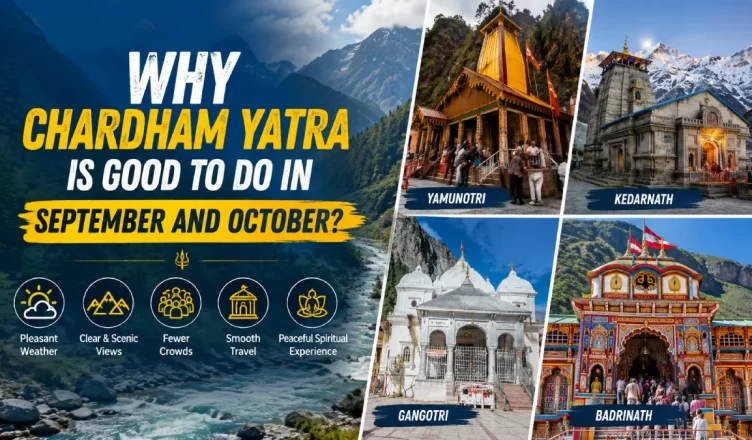
Ask any experienced Char Dham pilgrim which months they’d choose if they were doing the yatra again and nine out of ten will say September or October. Yet year after year, lakhs of first-time pilgrims crowd into the May–June peak season, waiting in 6-hour darshan queues, paying inflated hotel rates, and competing for helicopter slots that sold out months ago. This blog exists to change that.
The Char Dham circuit covering Yamunotri, Gangotri, Kedarnath, and Badrinath opens around Akshaya Tritiya (April/May) and closes around Bhai Dooj (October/November). Within that roughly six-month window, two distinct seasons emerge: the popular May–June peak, and the quieter, post-monsoon September–October window. Both are perfectly valid. But they are completely different experiences and this blog about best months for Char dham yatra breaks down every single dimension of that difference so you can decide which is truly right for you.
Whether you’re planning with family, travelling with elderly parents, booking a helicopter Yatra, or just seeking a deeper spiritual experience by the end of this guide, you’ll know exactly why so many seasoned pilgrims quietly book their tickets for September.
May–June vs September–October: The Full Comparison
A clear, honest look at every factor that matters for Char Dham Yatra– so you can make the right call for your situation.
| Factor | 🌸 May – June | 🍂 Sept – October |
|---|---|---|
| Temperature (Day) | 15°C–25°C (Comfortable) | 10°C–20°C (Cool & Crisp) Ideal Trekking |
| Temperature (Night) | 5°C–15°C at high altitude | 0°C–5°C at Kedarnath / Badrinath. Carry woolens. |
| Crowd Level | Peak season. Extremely heavy. Lakhs of pilgrims. Very Crowded | Significantly lower. Peaceful darshan. Best for Calm |
| Darshan Queue | 4 to 10 hours in regular queue (Kedarnath, Badrinath) | Under 1 hour at most dhams. No Long Wait |
| Mountain Views | Good. May have lingering haze or clouds. | Crystal-clear blue skies. Snow-capped peaks at their sharpest. Best Views |
| Road Conditions | Clear of snow. Well-maintained. | Repaired by BRO after monsoon. Generally excellent. Stable Roads |
| Rainfall Risk | Minimal in May. Monsoon can start late June. | Monsoon recedes by mid-September. Mostly dry. Low Risk |
| Hotel Prices | Peak rates. 50–100% premium on all accommodation. | Up to 50% cheaper. Good rooms easily available. Budget Friendly |
| Hotel Availability | Must book months in advance. Fills within days of announcement. | Better availability even with 2–3 weeks notice. Easier Booking |
| Helicopter Services | Fully operational. Slots sell out instantly. Extremely competitive. | Fully operational. Slots sell out but with more manageable demand. Best Completion Rate |
| Spiritual Atmosphere | Festive, energetic, crowd-driven devotion. | Quiet, meditative, deeply personal. More Reflective |
| Scenery | Green meadows, melting snow, fresh spring feel. | Autumn foliage, post-monsoon lushness, golden hues. Most Photogenic |
| Special Experience | Temple opening ceremonies (Kapat opening). Festive atmosphere. | Temple closing ceremonies. Brahma Kamal bloom. Valley of Flowers (Sept). Unique |
| Who It’s Best For | First-timers, families with school kids, those who want full infrastructure certainty. | Repeat pilgrims, photographers, those seeking peaceful darshan, senior citizens, couples. Recommended |
9 Reasons Experienced Pilgrims Choose September–October
Each of these reasons alone would be enough. Together, they make a compelling case that the autumn window may actually be the better yatra experience for most adults.
Darshan in Minutes, Not Hours
In May 2025 alone, over 1.6 million pilgrims visited the Char Dham sites. The result: darshan queues at Kedarnath and Badrinath can stretch 4 to 10 hours during peak season. Pilgrims stand for hours in the cold, exhausted from the trek, only to get a few seconds of darshan.
By October, crowd levels drop dramatically. Darshan queues at most dhams shrink to under an hour- sometimes far less. You can stand quietly before the deity, absorb the atmosphere, and offer your prayers with calm and clarity rather than being pushed forward by a surging crowd.
💡 Late October before closing is considered the quietest and most peaceful darshan period of the entire season. Some pilgrims do not even need VIP passes- regular darshan is unhurried and calm.
The Clearest Mountain Views of the Entire Season
In May and early June, the skies are generally clear, but there’s often lingering haze from the post-winter atmosphere. By September, the monsoon has done something remarkable: it has scrubbed the Himalayan air completely clean. The result is crystal-clear, cobalt-blue skies with the snow-capped peaks appearing in sharp, almost surreal definition.
Photographers who have done the Char Dham in both seasons consistently say that September–October light is incomparable. The snow-line drops with the first dustings of fresh autumn snow, the valleys glow with post-monsoon green, and the peaks reflect in newly placid rivers. It is simply the most photogenic time of year.
📷 For photography: autumn light (mid-morning to 2 PM) at Kedarnath valley and the Badrinath peak (Neelkanth at 6,596 m) is unmatched at any other time in the season.
Up to 50% Savings on Hotels & Packages
Peak season (May–June) adds a 50 to 100% premium on accommodation costs across all four dham regions from Guptkashi to Badrinath, from Barkot to Uttarkashi. The best hotels close to the temples are fully booked weeks before the season even begins, and rates are the highest they’ll be all year.
In September–October, accommodation rates drop significantly. Rooms that cost ₹4,000–₹8,000 per night in June can be found for ₹2,000–₹4,000 in October. Package prices for full Char Dham tours are similarly lower. If you’re planning a 5-day yatra for a family of four, the savings across hotels alone can easily cover travel costs from Delhi to Haridwar. Tempo Traveller for Chardham Yatra makes your trip memorable.
💰 October is the lowest-cost month in the Char Dham season. Hotels have strong availability even with 2–3 weeks’ notice- a luxury simply unavailable in May–June.
Post-Monsoon Weather: Cool, Stable & Dry
The monsoon retreats from Uttarakhand progressively through September. By early September, the skies start clearing; by mid-September, conditions are stable and reliable. Daytime temperatures at the dhams range from 10°C to 20°C- cool enough to make trekking genuinely comfortable, warm enough to not be punishing. Nights get colder (0°C to 5°C at Kedarnath and Badrinath by October), but woolens manage this easily.
Crucially, the weather is far more stable than the monsoon months of July–August, when rain can arrive without warning and landslides can close roads for days. The Border Roads Organisation (BRO) systematically repairs monsoon-damaged roads through August, meaning that by September the roads are often in better condition than they were in May.
⚠️ Important note for October visitors: nights at Kedarnath and Badrinath can drop to 0–2°C and below. Carry proper woolens, thermal layers, and a good windcheater. Some pilgrims arrive underprepared and find the cold genuinely uncomfortable.
Find Here: Chardham Yatra Package Cost
Better Helicopter Completion Rates
Helicopter services to Kedarnath (and across all four dhams in full helicopter packages) are fully operational in September–October. But what makes this window particularly good for helicopter pilgrims is the completion rate: morning slots in September–October have among the highest flight-completion rates of any period in the season. Clear skies, stable air, and dry conditions mean fewer weather-related cancellations or diversions.
By contrast, in June (as monsoon approaches), afternoon helicopter flights become increasingly unpredictable. Second-phase helicopter bookings for September–October slots (on IRCTC heliyatra) typically open in mid-June — mark that date and book immediately. The Guptkashi helipad slots sold out within 90 minutes on the first day of booking in 2025.
🚁 For senior citizens and those with mobility challenges: September–October helicopter yatra with its shorter queues, calm temple environment, and better weather reliability is genuinely the most comfortable option.
The Kapat Closing Ceremony- A Rare Spiritual Privilege
Most pilgrims know about the Kapat Opening ceremonies in April–May- the grand, festive moment when the temple doors open after winter. Fewer know that the Kapat Closing (in October–November) is an equally, if not more, profound ceremony. When the temples close for winter, the deities are specially adorned, and the Utsav Murti (the movable idol) is carried in a grand procession down to its winter residence.
Kedarnath’s idol travels to Omkareshwar Temple in Ukhimath. Badrinath’s deity goes to Pandukeshwar. Gangotri’s idol is taken to Mukhba Village. Yamunotri’s travels to Kharsali. The closing procession, with temple priests, devotional music, and a small, devoted gathering of pilgrims, is something most summer visitors never get to witness — and those who do describe it as among the most moving experiences of their spiritual life.
🌸 Navratri (September/October) and Diwali preparations add a festival layer to the entire yatra experience, with extra devotional energy at all four temples.
Valley of Flowers & Brahma Kamal — Only in This Window
The area around Badrinath connects to Govindghat, the starting point for the Valley of Flowers trek — a UNESCO World Heritage Site that blooms from July to September. Pilgrims doing the Char Dham in September can combine their Badrinath darshan with a side-trip to the Valley of Flowers, which in September transitions from its peak bloom to stunning autumn shades while maintaining clear skies and manageable trails.
Perhaps most significantly, September is the window when Brahma Kamal- Uttarakhand’s state flower, the rare sacred high-altitude lotus- blooms near Kedarnath and Hemkund Sahib. This extraordinary flower blooms only in late summer and early autumn, and most May–June visitors simply never get to see it. It is considered deeply sacred and its sighting during a pilgrimage is regarded as an exceptional blessing.
🌸 Brahma Kamal blooms only in the August–September window near Kedarnath. This is a sight unavailable to any May–June pilgrim, regardless of how much they plan or pay.
Easier Planning, Less Stress, More Flexibility
In May–June, every single logistical element of the Char Dham Yatra is under maximum pressure simultaneously. Helicopter slots sell out within minutes of opening. GMVN guesthouses fill within days. Pony and Dandi services are in peak demand. Roads are congested with convoys. Even getting a table for dinner near Kedarnath can involve a wait.
September–October reverses almost all of this. You can still find hotels with 2–3 weeks notice. Package availability is better. Pony services have capacity. The roads — repaired by BRO — have lighter traffic. And crucially: you can adjust your itinerary if needed without cascading booking failures. For first-timers who might not know exactly what they’re doing, this flexibility reduces stress enormously.
📋 One important caveat: still register early via the official Char Dham registration portal (registrationandtouristcare.uk.gov.in). Registration is mandatory and checkpoints deny entry without it — regardless of season.
The Best Choice for Elderly Pilgrims & Those with Health Concerns
For senior citizens, the reduced crowd environment of September–October is not a preference — it’s a genuine health and safety advantage. Shorter darshan queues mean less prolonged standing. Fewer pilgrims on the Kedarnath trek means less congestion on narrow paths and at rest points. Pony and Dandi services have better availability. Medical facilities en route are less overwhelmed.
The cooler but stable temperatures are also generally better tolerated by older pilgrims than the warmer but more humid June conditions. The combination of calm roads, available accommodation, shorter queues, and lower crowds makes the autumn window the expert recommendation for any pilgrim for whom physical exertion is a concern.
👴 Expert recommendation for senior pilgrims: September helicopter yatra, with its shorter ground queues at helipads, stable weather, and calm atmosphere, is the most comfortable Char Dham experience available.
Char Dham in September–October: What to Expect at Each Shrine
Conditions vary slightly across the four dhams based on altitude and location. Here’s a quick-reference breakdown.
🕉️ Goddess Yamuna
Yamunotri
Sept–Oct: 5°C–18°C
Post-monsoon clarity makes the 6 km trek from Janki Chatti very pleasant. The Garam Kund hot spring is particularly inviting in cooler temperatures. Crowds are a fraction of peak season.Closes: Late October / November
🌊 Goddess Ganga
Gangotri
Sept–Oct: 8°C–20°C
Gangotri town is peaceful and accessible. The Bhagirathi River runs clear after monsoon. Spectacular views of the Garhwal peaks. Gangotri closes around 10 November.Most Scenic in October
🔱 Lord Shiva
Kedarnath
Sept–Oct: 5°C–15°C · Nights 0–2°C
The 16 km trek from Gaurikund (or helicopter from Phata/Guptkashi/Sersi) is best in Sept–Oct. No monsoon mud. Darshan queue drops from 8+ hours to under 1 hour. Brahma Kamal blooms in September.Best Darshan Experience
🪷 Lord Vishnu
Badrinath
Sept–Oct: 8°C–18°C · Nights 0–5°C
Badrinath is accessible by road (no trek required). The Tapt Kund (hot spring) for holy bath, Mana Village visit, and crystal-clear Neelkanth mountain views are at their finest in October. Valley of Flowers Nearby (Sept)
Book Chardham Yatra Package Rates from Delhi for booking a trip.
Every Question Pilgrims Ask About the September–October Window
Answering the most common doubts and concerns before you plan.
Q. Is it safe to do Char Dham Yatra in September? Doesn’t monsoon continue?
Early September can still see some residual monsoon rain — particularly in the first week. By mid-September, the monsoon recedes from Uttarakhand and conditions stabilize significantly. If you’re planning September travel, target the 15th September onwards for the most reliable weather. October is almost entirely dry and stable. The Border Roads Organisation (BRO) repairs monsoon-damaged roads through August, so road conditions in September are generally excellent.
Q. Will all four temples be open in September and October? What are the closing dates?
Yes — all four dhams are open through September and October. The temples typically close around Diwali / Bhai Dooj in November. Tentative 2026 dates suggest Gangotri closes around 10 November, Yamunotri and Kedarnath around 11 November, and Badrinath in mid-November. Always verify exact closing dates on the official Uttarakhand Tourism portal before booking as they are announced based on the Hindu Panchang calendar each year. Plan to complete your yatra by mid-October to have comfortable buffer before closings.
Q. Is helicopter service available in September and October? How do I book?
Yes — helicopter services are fully operational and have excellent completion rates in September–October due to clear skies and stable conditions. The official booking portal for Kedarnath helicopter is heliyatra.irctc.co.in. Second-phase bookings for September–October slots typically open in mid-June, so mark that date. Always book morning slots — afternoon slots have higher weather-related cancellation risk even in autumn. Private operators also offer full Char Dham helicopter packages from Dehradun; compare rates and book at least 6–8 weeks in advance.
Q. What clothes should I pack for Char Dham Yatra in September–October? It sounds very cold.
This is the most common underpreparation mistake. Days at lower altitudes (Haridwar, Rishikesh) are warm at 25–30°C, but nights at Kedarnath and Badrinath in October can drop to 0°C or below. Pack in layers: thermal innerwear, warm fleece/sweater, heavy windproof jacket, woolen socks and gloves, and a cap or balaclava. Waterproof trekking shoes are important. Carry a compact rain jacket as backup. Many pilgrims arrive in October dressed for summer and find the cold genuinely challenging — don’t make this mistake.
Q. My children have summer school holidays in May–June. Can I still do the yatra then?
Absolutely. May–June is perfectly valid for families with school-going children — it’s the most popular window for exactly this reason. The infrastructure is fully operational, weather is warm enough for kids, and the festive atmosphere can be spiritually exciting. The key is to book everything very early (hotels, helicopter, transport) as soon as the season is announced. If school holidays prevent an autumn visit, a well-planned May–June yatra is still a wonderful experience — just accept the crowds and build in extra time for darshan queues.
Q. I’m travelling with elderly parents (70+). Which time is better for us?
For elderly pilgrims, September or early October is the clear recommendation. The shorter darshan queues (minutes instead of hours) reduce standing fatigue dramatically. The calmer roads mean less stressful driving. Available accommodation means you don’t need to rush. The cooler temperatures are generally well-tolerated with proper clothing. Combine this with a helicopter option for Kedarnath, and the yatra becomes significantly more comfortable. One caution: ensure elderly pilgrims carry warm clothing for October nights. Also check the October travel note: nights at Kedarnath can drop to near 0°C.
Q. Is registration required in September–October too? What’s the process?
Yes- registration is mandatory for all pilgrims throughout the entire season, regardless of month. Register at the official portal: registrationandtouristcare.uk.gov.in. Security checkpoints on all routes to all four dhams deny entry without a valid e-pass. Registration is free. You’ll need a valid government photo ID (Aadhaar, PAN, Voter ID, or Passport). Senior citizens aged 70+ are also required to upload a medical fitness certificate. Register as soon as your travel dates are confirmed- the process is straightforward but should not be left to the last minute.
Q. What about landslides in September? I thought this was still a risk in the Himalayas.
Early September can still carry some residual landslide risk if the monsoon has been particularly heavy that year. By mid-September, the active monsoon landslide season is largely over in Uttarakhand. The BRO clears and repairs roads systematically. Before departure, always check road conditions at smartharidwar.uk.gov.in or local news. Have a buffer day built into your itinerary. In general, September–October road conditions are more reliable than any time in July–August and comparable to May–June.
Q. Can I visit Valley of Flowers along with Char Dham in September?
Yes — and this is actually one of September’s biggest advantages. The Valley of Flowers, located near Govindghat (25 km from Badrinath), is accessible from June to October. In September, the bloom begins to wind down but the valley transitions into beautiful autumn tones with excellent mountain visibility, far fewer trekkers, and a meditative quality experienced pilgrims love. Combine your Badrinath darshan with a 2-day side extension to Govindghat → Ghangaria → Valley of Flowers for a complete Himalayan experience. This combination is essentially impossible to do in May–June when the Valley of Flowers is not yet in bloom.
Packing List for September–October Char Dham Yatra
Different from a summer yatra- the key additions are cold-weather gear for altitude.
Clothing
- Thermal innerwear (top & bottom)
- Heavy fleece or sweater
- Windproof/waterproof outer jacket
- Woolen socks (2–3 pairs)
- Woolen gloves and cap/balaclava
- Comfortable trekking shoes
- Light puffer jacket for extra warmth
Documents
- Char Dham e-pass (registration)
- Government Photo ID (original)
- Medical certificate (senior citizens)
- Hotel booking printouts
- Helicopter booking confirmation
- Emergency contact card
Health & Safety
- Altitude sickness medicine (Diamox if prescribed)
- Paracetamol, ORS packets
- Antiseptic and first aid basics
- Lip balm and Vaseline
- Sunscreen SPF 50+
- Polarised sunglasses
Trek Essentials
- Trekking pole or walking stick
- Reusable water bottle (3L capacity)
- High-energy snacks and dry fruits
- Torch with extra batteries
- Compact rain cover / poncho
- Small waterproof backpack
Spiritual Items
- Puja flowers and prasad
- Small towel for holy bath
- Rudraksha mala or prayer beads
- Small dhoti/dupatta for darshan
- Cash (₹3,000–₹5,000 minimum — UPI fails at altitude)
The Verdict: When Should You Go?
There is no universally “wrong” time to do Char Dham Yatra. But if you can choose your dates freely- if you’re not bound by school holidays or fixed work schedules- the evidence is clear.