
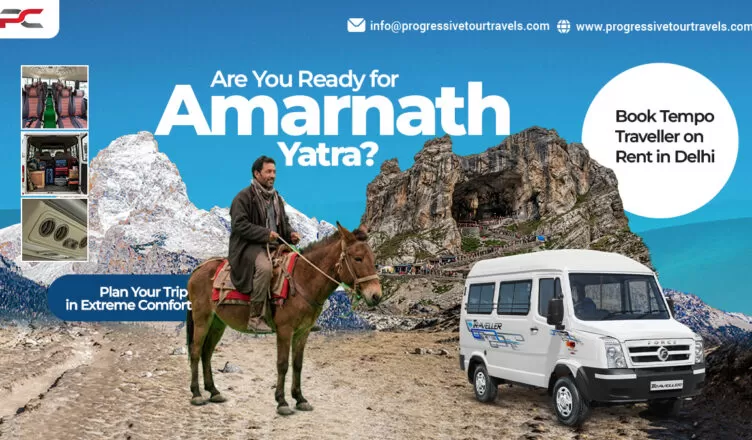
The Amarnath Yatra is one of the holiest pilgrimages in Hinduism- a trek to the sacred cave shrine of Shri Amarnathji, nestled high in the Himalayas of Jammu & Kashmir at an altitude of approximately 3,888 metres (12,756 feet). Inside the cave rests the revered naturally formed ice Shivlinga, believed to represent Lord Shiva himself. The linga waxes and wanes with the lunar cycle reaching its full height on Shravan Purnima (Raksha Bandhan), the auspicious last day of the Yatra.
Governed and managed by the Shri Amarnathji Shrine Board (SASB), this pilgrimage demands careful physical preparation, mandatory registration, and strict adherence to official health and safety guidelines. Whether you are a first-time pilgrim or a returning devotee, this guide covers all important instructions for Amarnath Yatra.
Key Insights of The Divine Journey to Baba Amarnath
14,000 ft- Max Altitude
37 Days- Total Yatra Window
2 Routes- Pahalgam and Baltal
Who Can Undertake the Yatra?
As per the Shri Amarnathji Shrine Board, the following eligibility criteria are strictly enforced. No exceptions are made- even for VIPs or public figures.
✓ Allowed
- Indian citizens aged 13 to 70 years
- Physically fit individuals with no serious pre-existing conditions
- Pregnant women with less than 6 weeks of pregnancy
- Any gender- male, female, or otherwise
- Persons with valid government-issued photo ID
- Pilgrims with a valid Compulsory Health Certificate (CHC)
✕ Not Permitted
- Children below 13 years of age
- Persons above 70 years of age
- Pregnant women with more than 6 weeks of pregnancy
- Pilgrims without a valid CHC from an authorised doctor
- Anyone without a Yatra Permit- security checkpoints deny entry
- Persons with uncontrolled cardiac, pulmonary or neurological conditions
Amarnath Yatra Registration Process- Step by Step
Registration is mandatory for every pilgrim and must be completed before arriving at the base camps. Slots open in April on a first-come, first-served basis with a daily cap of 15,000 pilgrims.
1. Get a Compulsory Health Certificate (CHC)- Mandatory First Step
Before anything else, visit a doctor or hospital authorised by your state government to obtain a CHC. This certificate confirms you are medically fit for high-altitude trekking. If your health changes between getting the certificate and the Yatra date, consult your doctor again before proceeding. The CHC must be from an authorised hospital in your state- not just any doctor.
2. Online Registration via SASB Official Website- Online Option
Visit the official SASB portal at jksasb.nic.in. Click on “Online Services” → “Yatra Permit Registration” → Read the guidelines and click “I Agree.” Fill in your name, Aadhaar number, mobile number, preferred date and route. Upload your passport-size photograph (JPEG/JPG, max 1 MB) and a scanned copy of your CHC (PDF only, max 1 MB). Verify your mobile number via OTP and submit. Pay the registration fee online using any available payment option.Online Option
3. Offline Registration at Bank Branches Across India- Offline Option
SASB has designated over 450 bank branches across India for offline registration. Visit any authorised branch (list available on SASB website), fill out the registration form, submit your CHC medical certificate, valid photo ID, and a passport-size photograph, then pay the fee and collect your Yatra Permit. This option is ideal for pilgrims who are not comfortable with online processes.
4. Offline Registration — Designated Centres in Jammu
In Jammu, pilgrims can collect a token slip from Mahajan Hall, Panchayat Bhawan, or Vaishnavi Dham- three days before the intended Yatra date. The next day, proceed to Saraswati Dham for the medical check-up and full registration. After this, collect the RFID card from a designated centre in Jammu to complete the process.
5. Collect RFID Card and Download Yatra Permit- Required at Checkpoints
Once registered, each pilgrim is issued an RFID card linked to their permit- this is used for tracking and security at multiple checkpoints along the route. Download your Yatra Permit from the SASB portal or collect a physical copy from the registration centre. Keep the original Yatra Permit, original Photo ID, and original CHC with you throughout the pilgrimage. The permit is non-transferable and valid only for the registered individual on the specified date.
Documents Required
Carry originals of all these documents throughout the journey. Photocopies are not accepted at security checkpoints.
Yatra Permit
Mandatory. Downloaded from SASB portal or collected offline. Valid for the specific registered date and route only. Non-transferable.
Compulsory Health Certificate (CHC)
Issued by a doctor or hospital authorised in your state. Must be in original. Photo file must be JPEG/JPG; CHC scan in PDF only.
Government Photo ID
Aadhaar Card, Voter ID, Passport, or Driving License. Original required — not a photocopy or digital copy alone.
Passport-Size Photograph
Recent colour photograph with white background. Format: JPEG/JPG. File size not more than 1 MB. Required at time of registration.
RFID Card
Issued during registration. Used at tracking checkpoints on both routes. Carry it at all times and do not tamper with it.
Filled Registration Form
Required for offline registration. Available at designated bank branches and on the SASB website for download.
“It is said that only those whom Baba Amarnath summons can undertake this Yatra. But when you do go — go prepared. The mountains are unforgiving to the unprepared, and supremely rewarding to the ready.” — Pilgrim wisdom, echoed at every langaar on the route.
Which Amarnatha Yatra route is best to take?
Traditional Route- Via Pahalgam
The longer, scenic route that has been the traditional pilgrimage path for centuries. Suitable for first-timers and those seeking a gradual climb with time to acclimatise.
- Jammu → Pahalgam — 315 km by road via Srinagar. Taxis and buses available from Tourist Reception Centre (Raghunath Bazaar). Camp at Nunwan Yatri Camp, 6 km before Pahalgam. Night 1 stay at Pahalgam.
- Pahalgam → Chandanwari — 16 km. Mini buses available. Trail runs along the Lidder River with panoramic views and numerous langar kiosks.
- Chandanwari → Pissu Top → Sheshnag — A steep climb to Pissu Top, then down to the legendary Sheshnag Lake camp. Night 2 at Sheshnag, beneath seven glacier peaks.
- Sheshnag → Mahagunas Pass → Panchtarni — 4.6 km steep ascent to Mahagunas Pass at 4,276 m (14,000 ft), then descent to Panchtarni at 3,657 m (12,000 ft). Night 3 camp.
- Panchtarni → Holy Cave — Final stretch along the Sangam of Amravati and Panchtarni rivers. Some pilgrims take a holy bath at Amravati before darshan. Return to Panchtarni same day.
Shorter Route- Via Baltal
A shorter but steeper route for the physically fit pilgrim who wants to complete the yatra in a single day. Return is via the same route — no overnight stay at the cave.
- Jammu → Baltal — ~400 km by road via Udhampur – Kud – Patnitop – Ramban – Banihal – KaziGund – Anantnag – Srinagar – Sonamarg – Baltal. A breathtaking journey through valleys, waterfalls, and the Himalayan landscape.
- Baltal → Holy Cave — 14 km one way. Route: Baltal – Domali – Barari – Sangam – Amarnath Cave. The path is narrow kuchha (unpaved) road with steep rises and falls. Ponies available. Dandies (palanquins) available for elderly and handicapped pilgrims.
- Darshan & Return — After darshan at the Holy Cave, pilgrims return to Baltal base camp the same day by the same route. Overnight camping at base camp if needed before departure.
How to Reach the Starting Points
Jammu is the main gateway. From Jammu, pilgrims proceed to either Pahalgam or Baltal by road.
By Air
Srinagar is the nearest aerodrome, well-connected with daily flights from Delhi and Jammu. Some weekday flights also serve Chandigarh and Leh. From Srinagar, proceed to Pahalgam (96 km) or Baltal by road. Srinagar is also a beautiful stopover with Dal Lake and Mughal gardens worth visiting.
By Train
Jammu Tawi is the nearest major railway station, well-connected to Delhi, Mumbai, and most Indian cities via express trains. Jammu is also known as the “City of Temples” — worth a stopover to visit Raghunath Temple and Mahadev Mandir before the Yatra commences.
By Road
Jammu and Srinagar are connected by the national highway. Buses and taxis are available from Tourist Reception Centre (TRC) in Jammu. Buses and taxis can be hired daily or on a full-tour basis. For Baltal, the scenic route passes through Sonamarg- one of Kashmir’s most stunning valleys. If you are planning Amarnath Yatra from Delhi by road, booking Tempo Traveller on Rent in Delhi is most peculiar option.
Official Do’s and Don’ts
These guidelines are directly sourced from the Shri Amarnathji Shrine Board’s official portal. Following them can be the difference between a safe yatra and a life-threatening situation.
Do’s
- Start preparatory morning/evening walks of 4–5 km per day at least a month before the Yatra to build physical fitness
- Practice deep breathing exercises and yoga, especially pranayam, to improve your body’s oxygen efficiency at altitude
- Drink approximately 5 litres of fluid per day to combat dehydration and altitude-related headaches
- Consume plenty of carbohydrates to reduce fatigue and prevent low blood sugar levels throughout the trek
- Walk slowly while ascending and take time to acclimatise — pause and rest on steep inclines
- Follow the time-logging system and respect the walking times displayed on boards between locations
- Carry portable oxygen as it can be life-saving in case of breathing difficulty at high altitude
- Descend immediately to a lower elevation if you develop any symptoms of altitude sickness
- Contact the nearest medical facility (located every 2 km along the route) for any signs of High Altitude Sickness or discomfort
- If your health changes after obtaining the CHC, consult your doctor again before embarking
- Carry your original Photo ID and Medical Certificate throughout the Yatra
Don’ts
- Don’t drink alcohol, caffeinated beverages, or smoke- these worsen dehydration and altitude sickness significantly
- Don’t ignore symptoms of high-altitude illness- headache, nausea, dizziness, or breathlessness are warning signs
- Don’t ascend further if you already have altitude illness- descend immediately
- Don’t take advice from a sick yatri whose judgment may be impaired by altitude sickness
- Don’t overexert beyond your normal physical capacity- the mountains demand humility
- Don’t attempt the trek without completing official registration and obtaining a valid Yatra Permit
- Don’t travel without your original documents- photocopies are not accepted at checkpoints
Suggested Read: How to do Kedarnath Trek Comfortably?
High Altitude Health Advisory
The pilgrimage involves trekking at altitudes as high as 14,000 feet. Untreated altitude sickness can become fatal within hours. Know the warning signs.
- Loss of appetite, nausea, and vomiting
- Fatigue, weakness, dizziness, and lightheadedness
- Difficulty in sleeping at altitude
- Visual impairment or bladder/bowel dysfunction
- Loss of coordination and paralysis on one side
- Gradual loss of consciousness and mental changes
- Drowsiness, chest tightness, and congestion
- Fast breathing and significantly increased heart rate
Packing Essentials for Amarnath Yatra
The weather at altitude is unpredictable. Pack for extreme cold, rain, and intense sun- often all in the same day.
Clothing & Warmth
- Woolen innerwear and thermal layers
- Heavy jacket and warm sweaters
- Woolen socks, gloves, and caps
- Waterproof windcheater or rain jacket
- Sturdy trekking shoes with strong grip
- Comfortable trekking pants
Medical & Safety
- Portable oxygen cylinder (highly recommended)
- Antiseptic cream and bandages
- Painkillers and ORS packets
- Medicines for nausea and altitude headache
- Prescription medicines (if any)
- Lip balm and Vaseline for cold winds
Sun & Weather
- Sunscreen (SPF 50+) — UV is intense at altitude
- Polarised sunglasses
- Sun hat or balaclava
- Rain poncho or waterproof cover
Food & Water
- Water bottle — aim for 5 litres per day
- Dry fruits, nuts, and energy bars
- Glucose powder and electrolyte sachets
- Lemon candies and sour sweets (help with nausea)
- High-carbohydrate snacks
Documents & Gear
- Original Yatra Permit
- Original CHC and Photo ID
- RFID card (always on person)
- Torch with extra batteries
- Trekking pole or walking stick
- Small backpack (waterproof preferred)
At the Cave
- Fresh change of clothes for darshan
- Flowers, prasad, and puja items
- Small towel for holy bath at Amravati
- Dry bag for keeping items waterproof
- Camera (single-lens, low-weight)
Begin Your Journey
The Amarnath Yatra is not merely a trek- it is a transformation. The ice Shivlinga waits, the mountains test, and every step is a prayer. Prepare well, register on time, respect the official guidelines, and walk with faith. May Baba Amarnath bless your journey. You can also read 12 Jyotirlingas Darshan Guide to visit tewlve Shiva adobes in India.